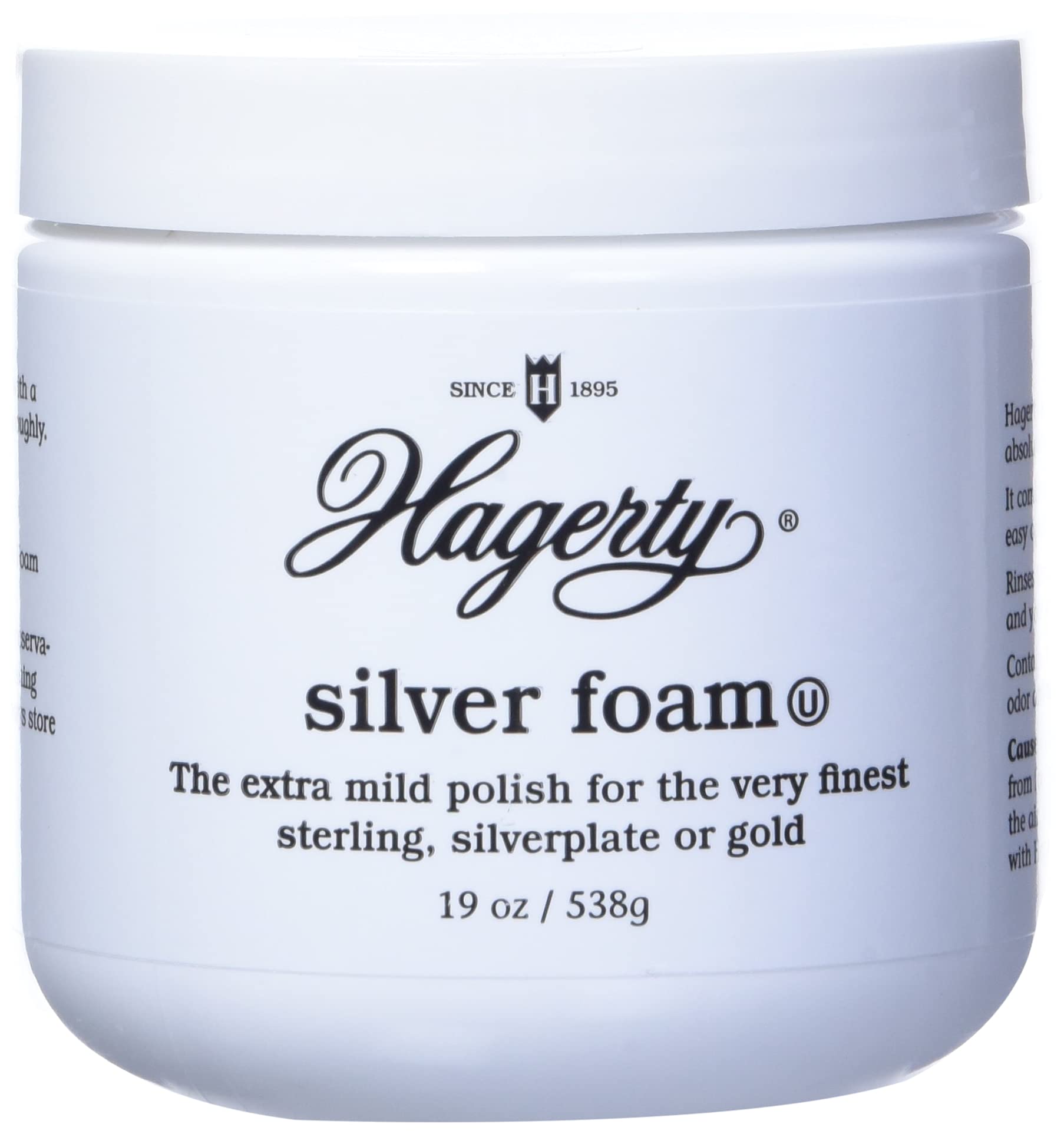
Hagerty Silver Foam is one of those household products that has been around long enough to feel almost institutional. The brand dates its silver care line to 1895, and the foam formula in this 19-ounce jar is aimed at sterling silver, silver plate, gold, and gold plate. It is made in the USA and carries kosher certification, details that matter more to some buyers than others but are worth noting for accuracy.
The product is a foam rather than a liquid or a paste, which changes how it behaves in practice. You apply it with a soft cloth or sponge, work it over the surface, and then rinse or wipe away residue. Because it is a foam, it stays where you put it better than a thin liquid and does not run down the side of a candlestick the way some sprays do. That makes it practical for upright pieces, flatware, and objects with curves or recessed areas where a liquid would pool and drip.
In real-world use, this is the kind of polish people reach for during seasonal cleanups rather than weekly maintenance. A typical session involves laying out flatware, trays, or serving pieces on a towel, applying the foam in small sections, and buffing with a clean cloth. The 19-ounce jar is a fairly generous size for occasional use and will last a long time in a household that polishes a few times a year. For anyone maintaining a larger collection, the format is efficient because you can dip a cloth into the jar rather than spraying and wasting product.
Functionally, the foam is designed to lift tarnish rather than simply coat it. On lightly tarnished silver it generally works quickly, and the foam consistency helps keep the product in contact with the metal long enough to do its job. On heavier tarnish, expect to apply more than once and to use some elbow grease; no polish removes decades of dark oxidation in a single pass, and this one is no exception. The instructions call for rinsing or wiping thoroughly afterward, which is important because leftover residue can dull the finish and, on silver plate, residue left in crevices is difficult to remove later.
There are trade-offs worth considering. Foam is less convenient than a dip or a impregnated polishing cloth for quick touch-ups, and it requires a water rinse or careful wiping, which means more steps and more cleanup than a simple cloth. It also is not a substitute for professional restoration on deeply pitted or damaged pieces. Compared with tarnish-preventing strips or anti-tarnish storage bags, this product cleans existing tarnish rather than preventing it, so it complements rather than replaces those preventive measures. Compared with liquid dips, the foam gives more control and is less likely to strip or dull a finish if used as directed, but it takes more effort per piece.
One limitation is that the product is intended for silver and gold, not for silver with aged patina that is meant to stay dark in recessed areas. Aggressive polishing can remove that contrast, and the foam does not distinguish between tarnish you want gone and patina you want to keep. Users restoring antique pieces with intentional darkening should test on an inconspicuous area first. The jar format is also less portable than a tube or cloth, so it is better suited to a drawer at home than a travel kit.
This polish suits people who own sterling or silver-plate flatware, trays, candlesticks, or serving pieces and who are willing to spend some time on maintenance a few times a year. It is also reasonable for gold jewelry and gold-plated items, though as with any polish, plated pieces warrant a gentle hand. It is less suitable for someone who wants a one-step wipe-and-go solution, for heavily damaged pieces that need a jeweler, or for anyone looking primarily for tarnish prevention rather than removal. Buyers should also note that kosher certification and domestic manufacturing are selling points for some households but do not change the core performance, which is that of a dependable, moderately effortful metal polish with a long track record.