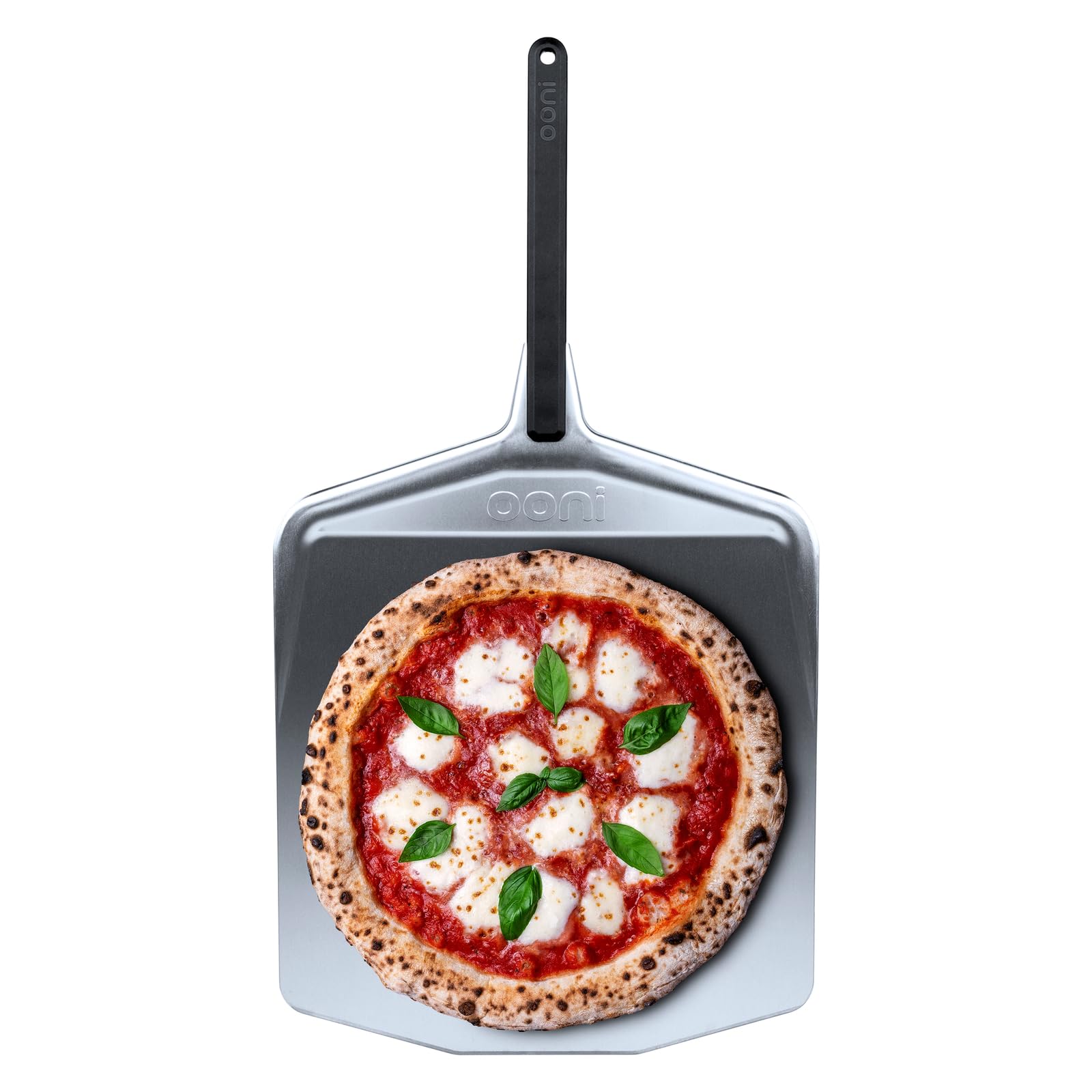
The Ooni 16-inch Metal Pizza Peel is a tool designed for a specific audience: home pizza makers using high-temperature ovens, particularly Ooni’s own models or similar outdoor setups. It’s a perforated metal paddle with a long handle, intended for launching and turning pizzas quickly. After testing it with a few batches of Neapolitan-style pies in a gas-fired oven, some practical observations stand out.
First, the build is straightforward. The peel is made from anodized aluminum, which keeps it lightweight—around 1.5 pounds—and resistant to rust. The handle is about 16 inches long, which offers decent reach into a hot oven without feeling unwieldy. The surface is perforated with small holes, which help reduce friction when sliding the pizza off. This is a key feature for high-heat cooking, where dough can stick if there’s too much contact area.
In real use, the peel works best for launching pizzas onto a hot stone or steel. The thin metal edge slides under the dough easily, especially if you’ve used semolina or cornmeal on the peel. Turning the pizza mid-bake is also manageable, though it takes a bit of practice to get the angle right. The perforations do help with airflow, which can prevent the dough from steaming and sticking.
However, there are limitations worth noting. The metal surface is not non-stick, so you need to be generous with flour or semolina to avoid sticking. If you’re using a wet dough or a high-hydration recipe, this peel can be tricky—dough might sag through the holes or stick if you’re not quick. Also, the handle is not insulated, meaning it can get warm if left near the oven opening for too long. It’s fine for quick moves, but you wouldn’t want to hold it indefinitely.
Compared to a wooden peel, this metal version has trade-offs. Wood peels are often better for holding shaped dough without sticking, as they absorb moisture. But they can warp or char over time in very high heat. The Ooni metal peel handles temperatures up to 900°F without issue, making it more durable for extreme conditions. Wood peels also tend to be heavier and harder to slide under partially cooked pizzas. So, if you’re baking at lower temperatures (under 500°F) or prefer a more forgiving surface, a wooden peel might be a better fit.
Who is this peel for? It’s suitable for home cooks who frequently make thin-crust or Neapolitan-style pizzas in a dedicated pizza oven. It’s also a good choice if you value lightweight tools and need something that won’t degrade over time from heat exposure. It’s less ideal for those who make thicker, wetter doughs or who want a peel that doubles as a serving board—the metal gets hot and isn’t great for table presentation.
One more point: the size. The 16-inch width fits most home pizza oven openings, but if your oven is smaller (like some portable models), it might be tight. Measure your oven’s depth before buying. The peel is also not dishwasher-safe; hand washing is recommended to avoid damaging the anodized finish.
Overall, the Ooni 16-inch Metal Pizza Peel does its job without fuss. It’s not a revolutionary tool, but it’s functional for its intended use. The main trade-off is the learning curve with sticky doughs and the need for extra flour. For experienced pizza makers, it’s a reliable accessory. For beginners, a wooden peel might be more forgiving initially. Either way, it’s a solid option in the metal peel category, though not without its quirks.