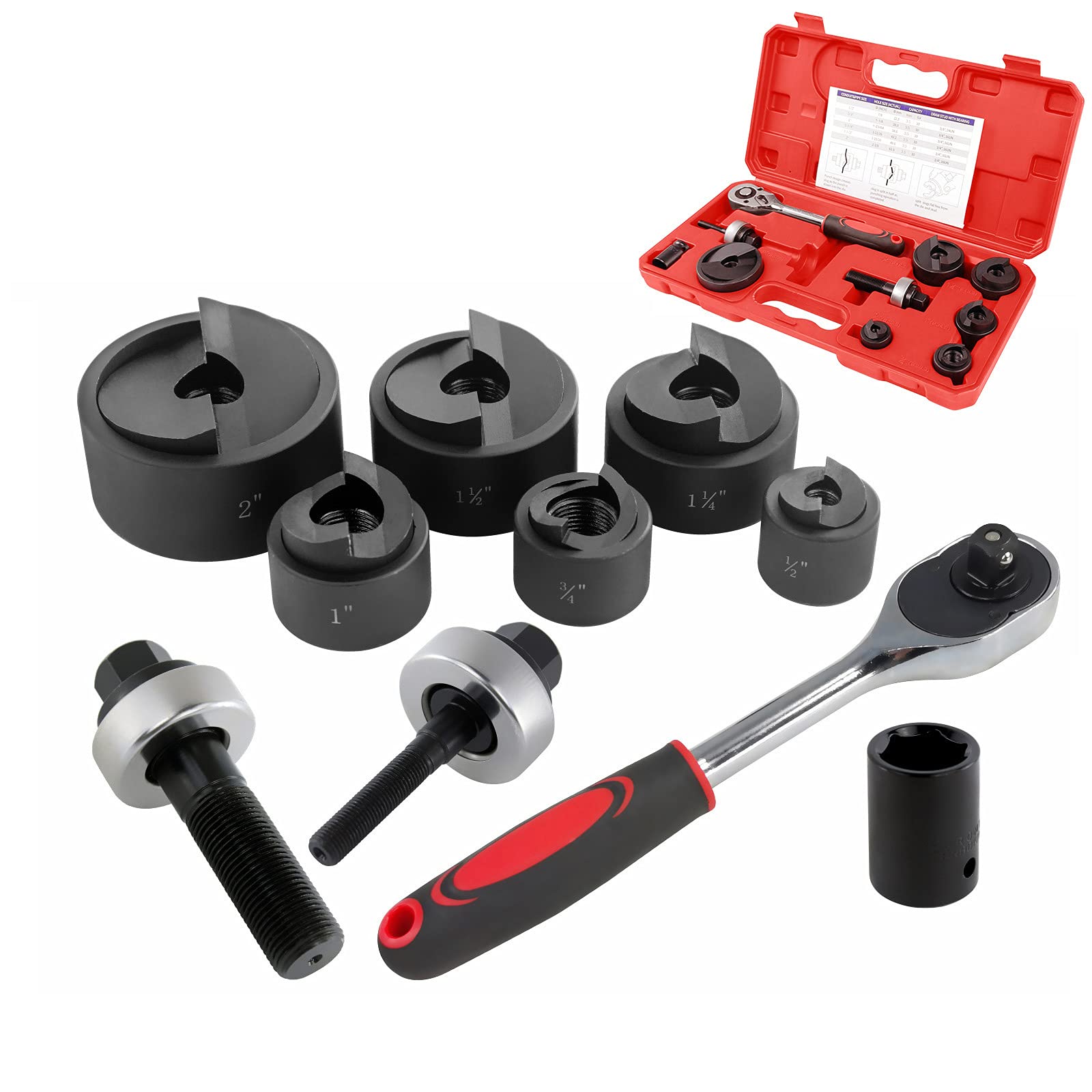
The Ratchet Knockout Hole Punch Driver Kit (model CC-60) is a tool set designed for cutting holes in electrical enclosures, panels, and junction boxes. It covers conduit sizes from 1/2 inch up to 2 inch, using a ratcheting mechanism to punch through metal. This review looks at how it performs in real electrical work, where precision and durability matter more than speed.
In practice, this kit is used by electricians or maintenance workers who need to create clean, round holes for running conduit or cable. The process involves drilling a pilot hole, inserting the draw stud, and then turning the ratchet handle to pull the punch through the metal. The ratchet action allows for incremental tightening, which is helpful when working in tight spaces or with thicker gauge steel. The set includes punches and dies for each standard conduit size, along with a carrying case that keeps everything organized on a job site.
Key functional features include the ratcheting handle itself, which provides mechanical advantage without requiring a separate wrench or hydraulic pump. The punches are made from hardened steel, and the draw studs are threaded to grip securely. The kit also uses a slug-buster design, meaning the cut-out slug is ejected as the punch completes the hole, reducing time spent clearing debris. This is a practical detail for repetitive work, such as wiring multiple panels in a commercial building.
However, there are limitations to consider. The ratchet mechanism, while useful, can be slow if you are making many holes in a row. A hydraulic knockout driver is faster for high-volume jobs, but it costs significantly more and requires a pump. Also, the handles on this kit can feel a bit short for large hands or when extra leverage is needed on thick stainless steel. The threading on the draw studs may also wear over time if not kept clean, especially in dusty environments. For occasional use, this is less of an issue, but daily users might prefer a kit with replaceable studs.
Compared to a hydraulic knockout set, this ratchet kit is lighter, more portable, and does not need a power source or hydraulic fluid. It is also easier to use in confined spaces where a hydraulic ram might not fit. On the downside, it requires more manual effort for each hole, and the maximum thickness it can handle is around 10-gauge steel or 14-gauge stainless. For thicker materials, a hydraulic punch is the better choice. For light to medium duty electrical work, this kit is a solid middle ground between cheap manual punches and expensive hydraulic systems.
Who is this kit suitable for? It fits well for electricians doing residential or light commercial panel work, maintenance technicians who need a portable solution, or DIYers tackling a single project like installing a subpanel. It is less suitable for industrial settings with heavy-gauge steel or high-volume production, where the slower speed and manual effort become a bottleneck. Also, it is not ideal for thin sheet metal like ductwork, where a simple knock-out punch or step bit would be faster and less likely to deform the material.
In summary, the Ratchet Knockout Hole Punch Driver Kit offers a practical, manual approach to cutting conduit holes. It balances cost, portability, and capability, but it does not replace hydraulic tools for heavy use. If you value control and don’t mind a bit of elbow grease, this set will serve you well for standard electrical installations.