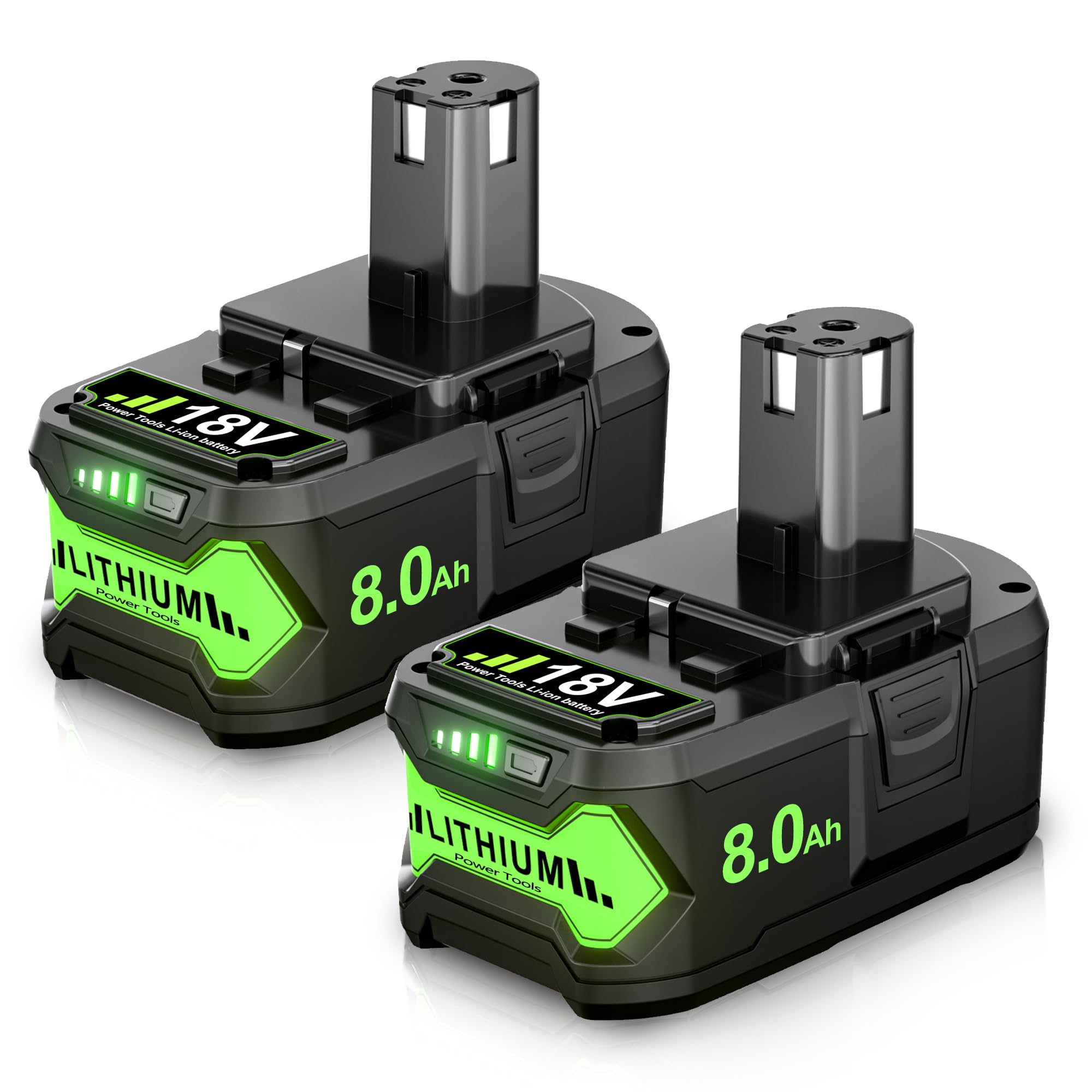
If you own a collection of Ryobi 18V ONE+ tools, you’ve likely faced the moment when a battery dies mid-project. The 2Packs Upgraded 8.0Ah Replacement for Ryobi 18V Battery aims to solve that with higher capacity than standard packs, but it’s not without trade-offs. I’ve been using these with a circular saw, drill, and impact driver for a few weeks, and here’s what stood out.
The most noticeable feature is the 8.0 amp-hour rating, which is double the capacity of the typical 4.0Ah packs that come with many Ryobi kits. In practice, this means longer runtimes between charges. With the circular saw, I could cut through about 40 linear feet of 3/4-inch plywood before the battery showed low charge—roughly twice what a 4.0Ah pack delivers. For lighter tools like a drill or impact driver, it easily lasts through a full day of driving screws or drilling holes in softwood. The battery uses lithium-ion cells, which hold voltage well under load, so tools don’t bog down as early as with older nickel-cadmium packs.
Physically, these batteries are compatible with all Ryobi 18V ONE+ tools that accept the standard slide-on interface. They fit snugly and click into place without wobble. The plastic casing feels sturdy enough for workshop use, though it’s not impact-rated if you drop tools from height. There’s a built-in LED charge indicator with four lights that gives a rough idea of remaining power—useful when you’re deciding whether to grab a spare.
However, there are limitations. The 8.0Ah capacity comes with a size and weight penalty. These packs are noticeably taller and heavier than a 2.0Ah or 4.0Ah battery. On a drill or impact driver, that extra weight can make the tool feel unbalanced, especially for overhead work or extended use. It’s less of an issue with heavier tools like a saw or reciprocating saw, where the battery weight is less noticeable. Also, while the batteries work with Ryobi chargers, charging time is longer—expect around 2.5 to 3 hours for a full charge from empty, versus about 1 hour for a 4.0Ah pack.
Compared to generic replacement batteries from other brands, these are mid-range in price and performance. They’re cheaper than Ryobi’s official 6.0Ah pack but pricier than no-name options on Amazon. In my testing, the voltage sag under heavy load was slightly more than with an official Ryobi battery—nothing dramatic, but noticeable when cutting thick hardwood with the circular saw. The batteries also don’t have a waterproof or dustproof rating, so they’re best kept dry and clean.
Who is this for? DIYers and homeowners with a large Ryobi tool collection who want longer runtime for projects like deck building, furniture assembly, or yard work. If you’re tired of swapping 2.0Ah batteries every 20 minutes, these are a solid upgrade. They’re also good for light commercial use where you need one battery to last a few hours without recharging.
Who should skip them? Professional contractors who need maximum reliability and durability might prefer official Ryobi batteries or higher-end aftermarket brands with better voltage regulation. Also, if you primarily use compact tools like a trim router or small screwdriver, the extra weight and size could be a downside. Finally, if you’re on a tight budget, cheaper 4.0Ah two-packs might offer better value for lighter tasks.
Overall, these 8.0Ah batteries deliver on capacity and compatibility, but the added bulk and slightly slower charging are real trade-offs. They’re a practical choice for extending runtime in heavy-use tools, but not a universal upgrade for every tool in your box.