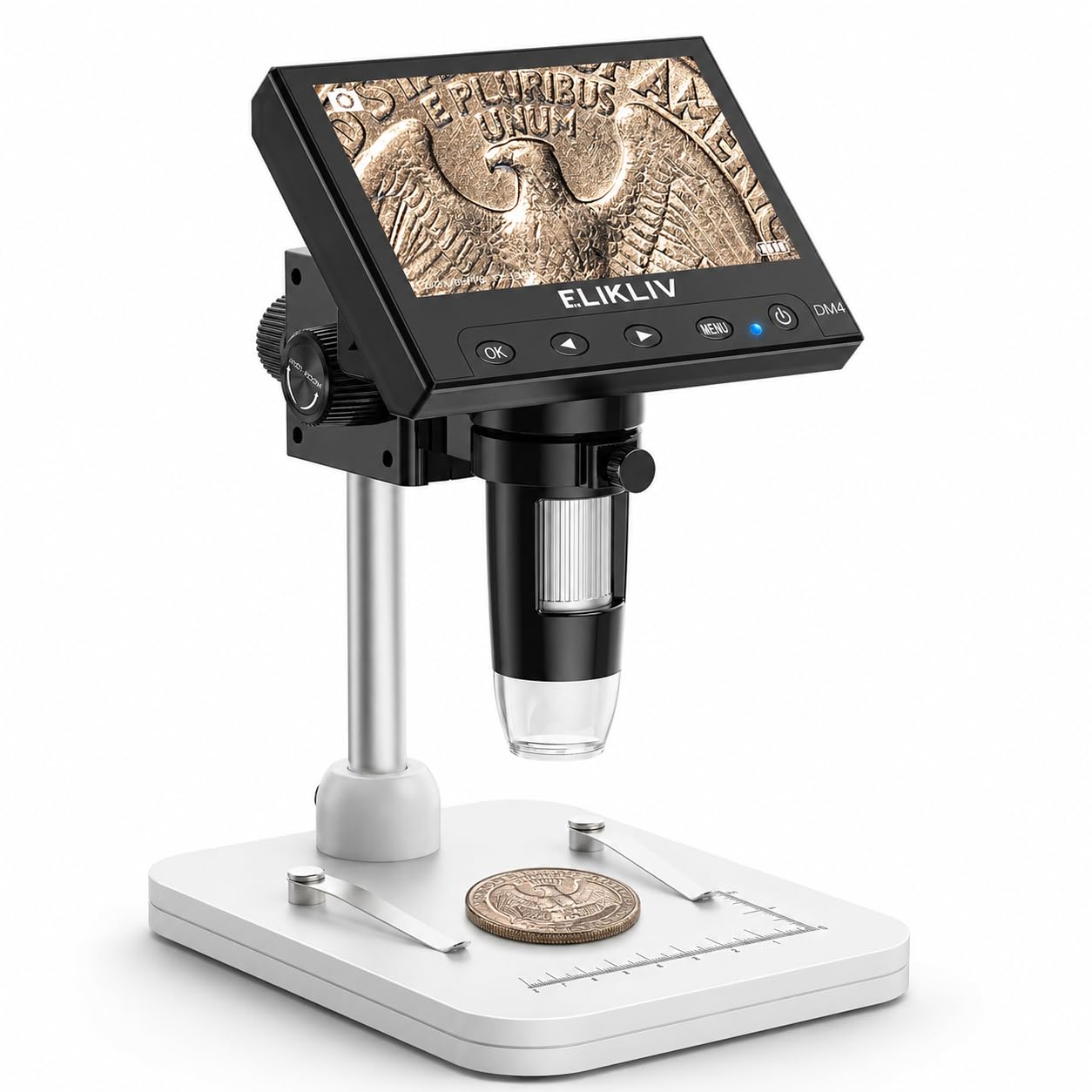
The Elikliv EDM4 is a digital microscope that sits in a specific niche: coin inspection, jewelry evaluation, and detailed surface analysis for hobbies or light professional work. With a 4.3-inch LCD screen and a magnification range up to 1000x, it aims to replace the squinting through a traditional eyepiece. After spending time with it examining coins, stamps, and even a few circuit boards, here is what stands out.
In real-world use, the main draw is the built-in screen. You place a coin or object on the adjustable stand, turn on the 8 LED lights, and see the details immediately without holding a magnifying glass or messing with a phone mount. For coin collectors, this is a game-changer for checking mint marks, scratches, or wear patterns. The 4.3-inch display is bright enough for indoor use, though it does show reflections if a desk lamp hits it directly. The 8 adjustable LED lights are helpful for controlling shadows, but at maximum brightness, they can wash out fine details on shiny coins.
The key functional features are straightforward: the LCD screen, a 1000x digital zoom (which is interpolated, not optical), and PC connectivity via USB. The zoom is where expectations need adjusting. At lower levels—say 10x to 50x—the image is crisp and usable for coin grading or stamp inspection. Past 200x, the digital interpolation introduces noticeable graininess, and at 1000x, it is more of a novelty for seeing dust particles or fiber textures on paper. For serious coin work, you will likely stay under 100x. The PC view function works with Windows and MacBook, but the included software feels dated. It captures still images and video at a decent 1080p, though the frame rate drops at higher zoom levels, making it less ideal for live inspection of moving objects.
One limitation worth noting is the focus range and stand stability. The microscope uses a fixed-focus lens with a manual wheel for coarse adjustment. At lower magnifications, focusing is easy, but above 200x, the depth of field becomes extremely shallow, and even slight vibrations from a desk or breathing can blur the image. The stand is plastic and feels light; if you press the object against the base, the whole unit shifts. A heavier, more rigid stand would improve usability at high zoom. Additionally, the maximum working distance is about 3 inches, so you cannot inspect larger items like books or large circuit boards without removing the stand entirely.
Compared to a traditional stereo microscope, the Elikliv trades optical clarity for convenience. A standard stereo microscope with eyepieces offers better color fidelity and depth perception at a lower cost, but requires you to look through a lens and often lacks an integrated camera. The EDM4 is better for sharing images or working in a group, since the screen is visible to multiple people. However, if you need high-resolution images for professional grading or documentation, a dedicated digital camera with a macro lens or a higher-end USB microscope (like an Amscope) will produce sharper results. The EDM4 sits in the middle—good for hobbyists who want quick visual feedback without a computer.
Who is this for? It suits coin collectors, stamp enthusiasts, or anyone who inspects small items like jewelry, minerals, or old currency. It is also helpful for checking solder joints on electronics, as long as the board fits under the lens. Who should skip it? Professionals needing precise measurements or optical-grade clarity, or users who want to inspect large objects. The plastic build and digital zoom limitations make it less ideal for heavy daily use. For the price point, it is a reasonable entry-level tool that does what it promises for casual inspection, but do not expect lab-grade performance.
In summary, the Elikliv EDM4 is a practical, screen-based magnifier for hobbyists who value ease of use over maximum resolution. It has clear trade-offs in stability and high-zoom quality, but for its intended purpose—looking at coins and small collectibles—it gets the job done without fuss.