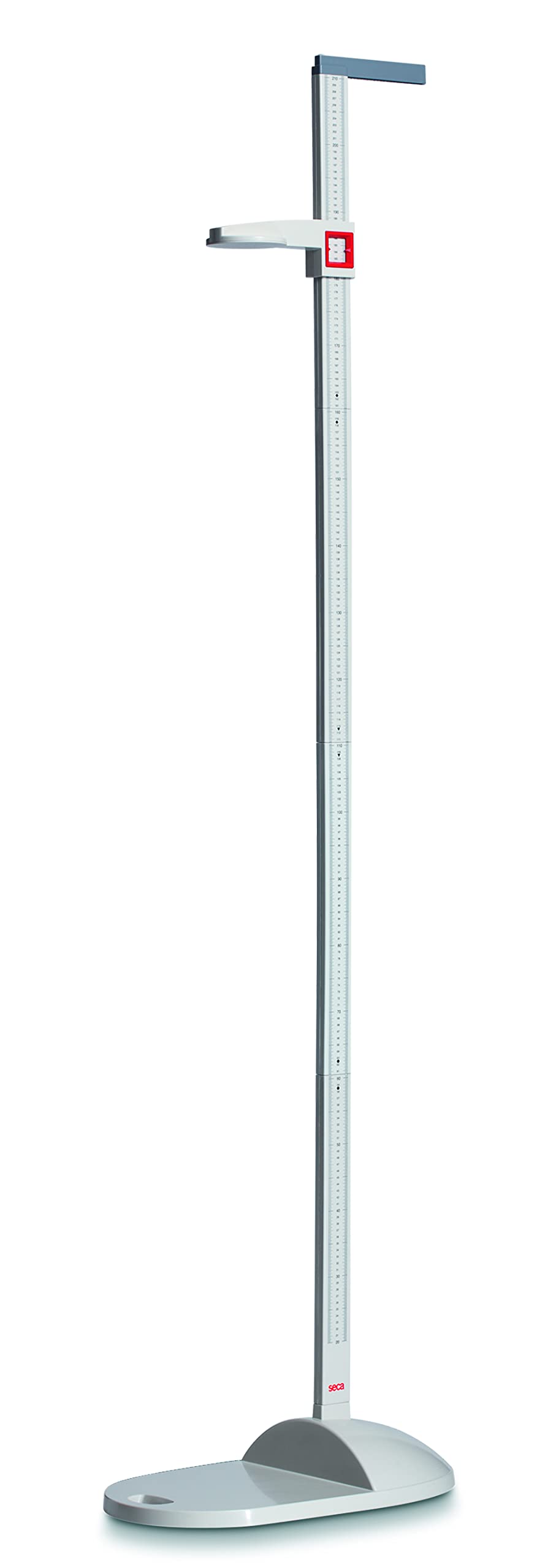
The seca 213 Portable Stadiometer is a mobile height measuring rod designed for use in clinics, field studies, and pediatric care. It covers a range from 20 to 205 cm, accommodating adults, kids, and infants. While it offers medical-grade accuracy and easy assembly, its portability comes with some trade-offs that may not suit every setting.
In real-world use, this stadiometer is often employed by healthcare professionals who need to measure height in multiple locations, such as mobile health units, school screenings, or home visits. The device folds down into a compact unit that can be carried in its included bag, making it relatively easy to transport. Assembly is straightforward—the rod sections click together without tools, and the measuring head slides smoothly along the column. However, the stability on uneven surfaces can be a concern; the base is not as wide as some floor-standing models, so it may wobble slightly on carpet or grass. This is a realistic limitation for field use, though on smooth floors it is stable enough for routine measurements.
Key functional features include a clear, easy-to-read scale with markings in millimeters, a large measuring head that minimizes parallax error, and a locking mechanism to hold the head in place. The device is made of aluminum and plastic, which keeps it lightweight but also means it may not withstand heavy abuse. The measurement range is generous, covering from infant length (with an optional infantometer attachment) to adult height, though the rod itself is designed for vertical standing measurements. Accuracy is specified to be within ±1.5 mm, which is typical for medical-grade equipment, but users should note that this precision depends on proper setup and consistent technique.
One trade-off is the lack of a built-in level or bubble indicator. Without this, ensuring the rod is perfectly vertical requires some care, especially on uneven floors. Users may need to check alignment manually, which adds time during busy clinics. Additionally, the plastic components, while durable enough for regular use, feel less robust than all-metal alternatives. Over time, the sliding mechanism might become slightly loose, though this is not a common issue reported in professional settings.
Compared to a wall-mounted stadiometer, such as the standard option found in many doctor’s offices, the seca 213 offers portability at the cost of some stability and convenience. Wall-mounted models are typically more rigid and require no setup, but they are fixed in place. For a mobile health worker, the seca 213 is a practical solution; for a stationary clinic, a wall-mounted unit may be simpler and more reliable. Another alternative is the use of a simple tape measure or height stick, but these lack the precision and ease of use that a dedicated stadiometer provides.
This product is suitable for professionals who need to measure height in multiple locations, such as traveling nurses, pediatricians in outreach programs, or researchers conducting field studies. It is also a good fit for clinics with limited space where a permanent installation is not feasible. However, it is not ideal for settings where extreme durability is required, such as in busy emergency rooms or sports medicine facilities that see heavy daily use. For those users, a heavy-duty floor-standing stadiometer might be a better investment. Similarly, parents looking for a home-use height measurer for their children might find the price point high for occasional use, though the accuracy is more than adequate for tracking growth.
Overall, the seca 213 Portable Stadiometer delivers on its promise of mobility and medical-grade accuracy, but it is not without compromises. The ease of assembly and transport make it a solid choice for mobile care, but users should be prepared for the extra care needed to ensure accurate readings in less-than-ideal conditions. It is a tool best suited for professionals who value portability and are willing to accept a slight learning curve in setup.