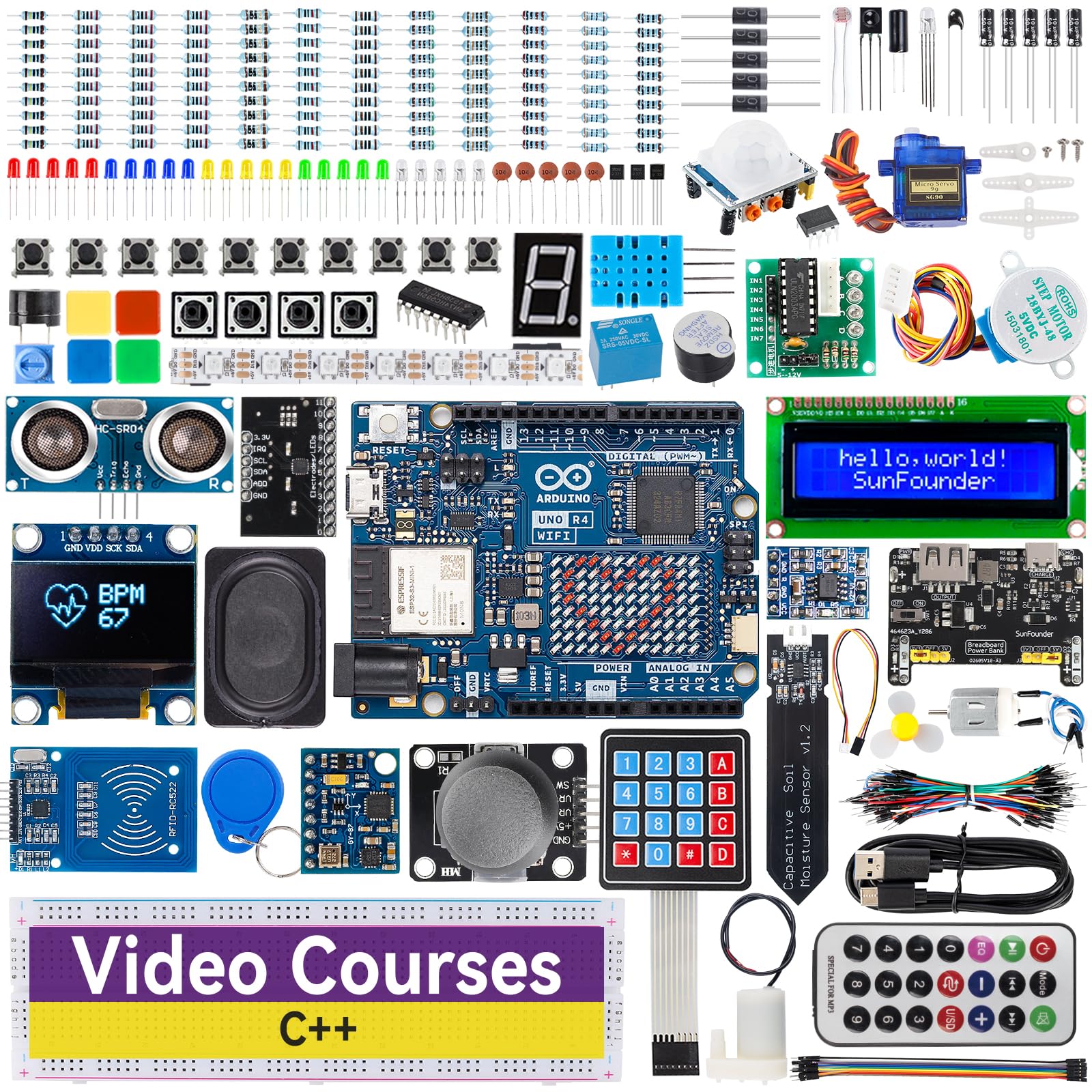
The SunFounder Elite Explorer Kit arrives in a sizable box, and the first impression is one of abundance. Inside, you’re greeted by a well-organized layout of components, sensors, and modules. The centerpiece is the original Arduino Uno R4 WiFi, a significant upgrade from the older R3, offering a more powerful processor and built-in wireless connectivity. This isn’t just another starter kit; it’s a comprehensive bundle that attempts to bridge the gap between simple learning projects and more advanced IoT experiments.
In practice, the kit feels like a portable electronics lab. The inclusion of an ESP32 module, an IIC LCD1602, and an OLED display means you can jump between different display technologies and wireless protocols without needing to source extra parts. The tutorials, which are hosted online and include video courses, guide you through the setup process step-by-step. For a beginner, this is invaluable. The projects start with basics like blinking an LED and reading a button, then gradually progress to more complex tasks involving sensors, motors, and network communication. The video content is particularly helpful, as it shows the physical wiring and expected outcomes, which reduces the frustration of debugging a breadboard circuit.
One of the kit’s core strengths is its alignment with the Arduino ecosystem. Since it uses the official Uno R4 WiFi, you get seamless compatibility with the Arduino IDE and the vast library of online resources. This is a major advantage over kits that use clone boards, which sometimes have driver issues or quirky behavior. The build quality of the components is solid, and the connectors are sturdy. The included sensors—ranging from temperature and humidity to ultrasonic distance and infrared—cover a broad spectrum of common electronic applications. For a hobbyist, this means you can build a weather station, a motion-activated alarm, or a robot car (the kit includes a chassis and motors) with relative ease.
However, no product is without its trade-offs. The sheer volume of components can be overwhelming for a complete novice. The tutorials do a decent job of pacing, but there is a learning curve, and some projects require careful attention to wiring diagrams. Additionally, while the kit includes an ESP32, the tutorials that use it are somewhat limited compared to the extensive coverage of the Arduino board itself. This feels like a missed opportunity, as the ESP32 is a powerful tool for IoT projects. Another point to consider is the price. This kit is positioned at a premium compared to generic starter kits that might include a clone Uno and a similar set of sensors. You are paying for the official board, the curated tutorials, and the convenience of having everything in one box.
When comparing it to other options, it’s useful to think about what you’re getting. A basic starter kit with a clone Uno might cost half as much, and you can find countless free tutorials online. However, those kits often lack the depth of project documentation and the reliability of the original board. On the other end of the spectrum, buying individual components separately could be cheaper if you only need a few specific items, but you’d lose the cohesive learning path that this kit provides. For someone who wants a structured introduction to electronics and programming, the SunFounder kit is a strong contender. It’s also a good choice for educators who need a reliable set of materials for a classroom or workshop.
Who is this kit for? It’s ideal for a beginner who is serious about learning electronics and has some patience for troubleshooting. It’s also great for an intermediate tinkerer who wants a convenient collection of components to prototype ideas quickly. The included projects can be adapted and extended, making it a useful resource for experimentation. On the other hand, it’s probably not the best fit for someone who just wants to build one specific project, like a simple LED blink, without diving deeper. The cost might be hard to justify for that use case. Similarly, advanced engineers might find the tutorials too basic, although they could still appreciate the convenience of having a wide range of parts on hand.
In terms of performance, the Uno R4 WiFi is a noticeable step up from the older R3. The increased processing power and memory allow for more complex programs, and the built-in WiFi and Bluetooth open up possibilities for remote monitoring and control. During testing, the board performed reliably, and the wireless connectivity was straightforward to set up. The OLED and LCD screens are easy to read, and the IIC interface reduces the number of pins needed, which simplifies wiring. One minor issue I noticed is that the included documentation for the ESP32 could be more thorough, but the online community is a good fallback.
Overall, the SunFounder Elite Explorer Kit is a well-rounded package that delivers on its promise of providing a comprehensive learning experience. It’s not perfect—the price point and the initial complexity might be barriers for some—but for those who are willing to invest the time and money, it offers a solid foundation in electronics and programming. The combination of the official Arduino board, a diverse set of components, and structured tutorials makes it a valuable tool for both self-learners and educators. Just be prepared to spend some time with it, and don’t expect to master everything overnight.