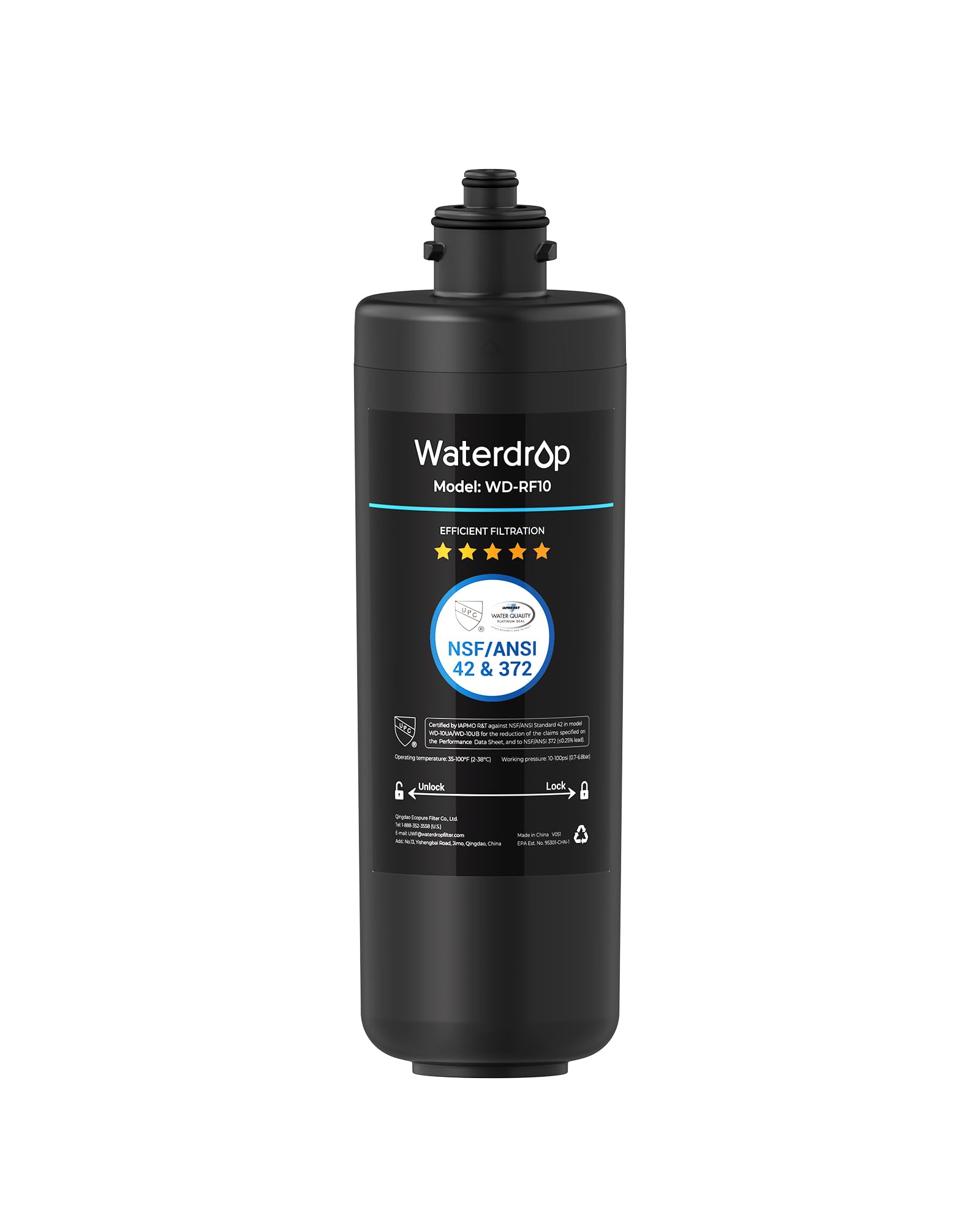
The Waterdrop RF10 is a replacement filter designed specifically for the brand’s 10UA, 10UB, and 10UB-B under sink water filtration systems. It’s marketed primarily as a way to maintain those systems over time, offering a claimed lifespan of up to 12 months or 2,000 gallons. In practice, this makes it a relatively low-maintenance option for households that want consistent filtration without frequent cartridge swaps.
This filter is NSF/ANSI 42 certified for chlorine, taste, and odor reduction, which is a common standard for basic filtration. It also claims to reduce certain PFAS compounds, including PFOA and PFOS, as well as lead. While the PFAS reduction is a notable feature, it’s worth noting that certification for that specific claim is not included in the NSF 42 listing. The filter relies on a combination of activated carbon and ion exchange media, which is typical for many under sink systems in this price range.
During real-world use, the RF10 does a reasonable job of improving tap water that has noticeable chlorine or a metallic aftertaste. It’s not going to turn heavily contaminated well water into something that rivals bottled spring water, but for municipal supplies with moderate issues, it’s generally effective. The carbon block design handles sediment and larger particles decently, though users with very hard water might still notice some mineral buildup in their appliances.
One clear strength is the filter’s installation process. It uses a twist-and-lock mechanism that snaps into place without tools, and the replacement interval is long enough that you won’t be thinking about it constantly. That said, the actual lifespan depends heavily on your water quality and usage volume. In households with high water consumption or particularly dirty source water, the filter might need changing closer to 8 or 9 months rather than the full year. This is a realistic trade-off that applies to almost any filter with a long-rated life.
Compared to a standard faucet-mounted filter, the RF10 offers better flow rate and doesn’t take up counter space, but it also requires more upfront investment in the base system. If you already own one of the compatible Waterdrop under sink units, this replacement is a logical choice. However, if you’re starting from scratch, you might consider a system like the APEC ROES-50, which uses reverse osmosis and typically provides more thorough contaminant removal, though at a higher cost and with more complex installation.
A limitation worth mentioning is that the RF10 does not address dissolved solids, heavy metals like arsenic, or microbial contaminants. For those concerns, a reverse osmosis system or a UV filter would be more appropriate. Also, the filter’s PFAS reduction claim is not independently verified by NSF for that specific contaminant, so if removing PFAS is your primary goal, you might want to look for a filter with explicit certification for that purpose.
Who is this filter suitable for? It’s a good match for homeowners who already have a compatible Waterdrop system and want a straightforward, long-lasting replacement that handles chlorine, taste, and basic lead reduction. It’s also fine for renters who can install an under sink system without permanent modifications. On the other hand, it’s not ideal for people with very hard water, those needing comprehensive filtration for well water, or anyone who prioritizes certified PFAS removal above all else.
In summary, the Waterdrop RF10 is a competent replacement filter that does what it sets out to do. It’s not groundbreaking, but it’s reliable for the right use case. Just keep realistic expectations about its limitations and check your water quality before committing.