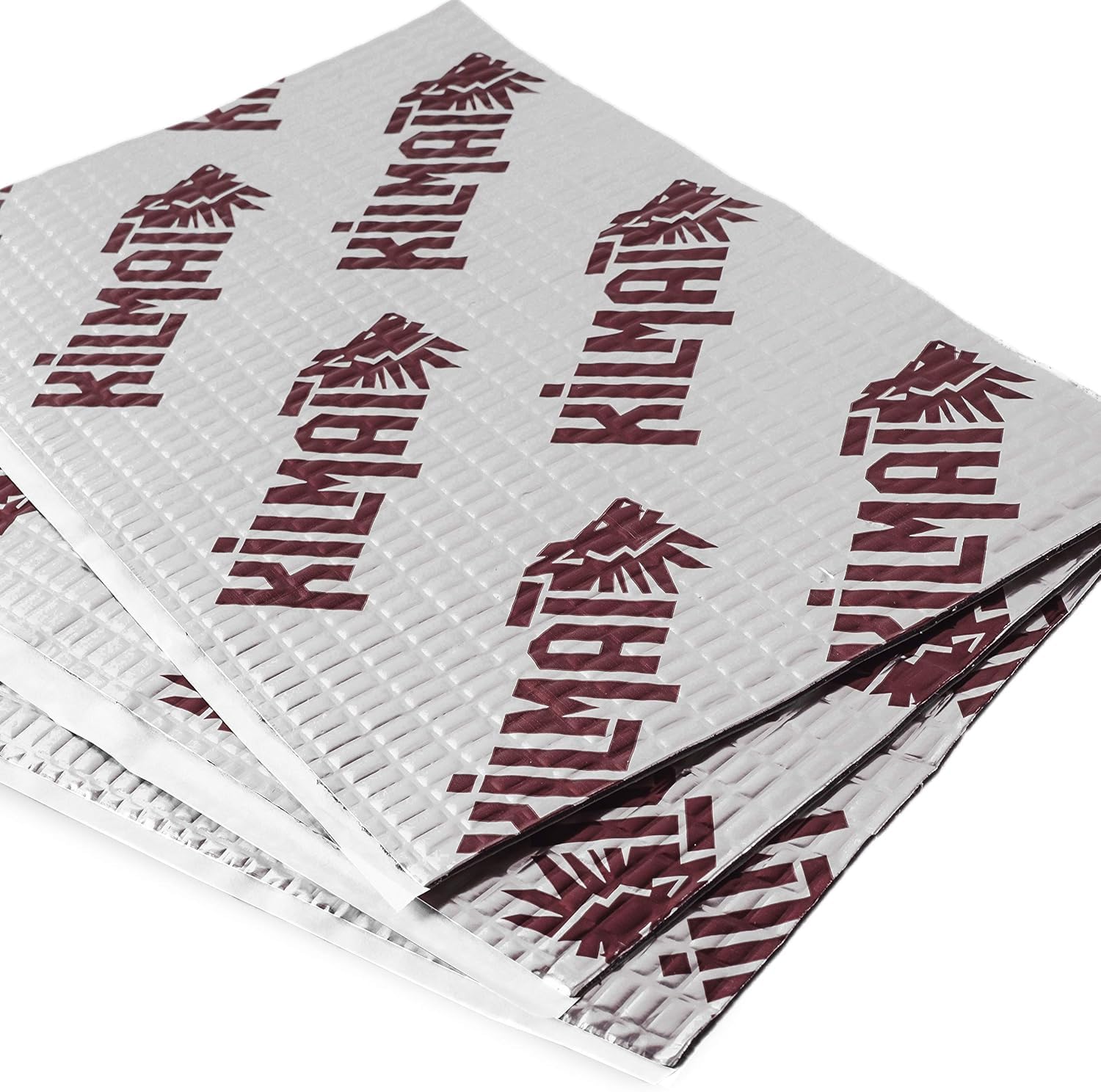
Automotive sound deadening is one of those upgrades that sounds straightforward but often delivers mixed results depending on the material and installation. The 80 mil 10 sqft Car Sound Deadening Mat, a butyl-based sheet, aims to reduce road noise, vibrations, and panel resonance in vehicles. After spending time with it in a few real-world applications, here is a balanced look at what it does and does not do.
This product comes as a roll of 10 square feet of material, each sheet being 80 mils thick. For context, 80 mil is a common thickness for automotive deadeners, sitting between thinner 50 mil options and heavier 120 mil or more. The butyl composition gives it a dense, slightly tacky feel that adheres to metal panels when pressed firmly. In practice, users typically apply it to doors, floor pans, trunk floors, or roof panels—any large, flat surface that tends to vibrate or transmit noise from the road or exhaust.
One of the key functional features here is the butyl material itself. Unlike asphalt-based deadeners, butyl does not become brittle in cold weather or overly soft in heat, which is a real advantage for cars that experience temperature swings. The adhesive backing sticks well to clean, bare metal, and the material can be cut with a utility knife or heavy scissors to fit irregular shapes. Once installed, it adds noticeable mass to panels, which dampens vibrations and reduces the ringing sound when you tap on the metal. This is not magic—it simply converts vibrational energy into a small amount of heat, lowering the noise floor inside the cabin.
In real-world usage, this mat performs adequately for its intended purpose. On a sedan’s doors, it cut down on the hollow sound when closing them and reduced some mid-frequency road noise from tire roar. On a truck’s floor pan, it helped diminish heat transfer slightly, though it is not marketed as a thermal insulator. The 10 square feet covers roughly one large door or a small trunk area, so multiple rolls are needed for a full vehicle. That is not a flaw, but it is worth noting for budgeting.
However, there are limitations. First, installation requires patience and proper surface preparation. If the metal has any rust, grease, or old adhesive residue, the mat will not stick well and may peel over time. Using a roller or hard plastic tool to press it down is essential for good contact. Second, 80 mil thickness is a compromise: it is heavy enough to dampen vibrations but not as effective on very large or thin panels as thicker materials would be. For a large van or SUV floor, you might notice that some low-frequency noise persists. Third, this product does not block airborne noise like engine or wind sound as effectively as a dedicated mass-loaded vinyl barrier. It is a damper, not a sound blocker, so expectations should be realistic.
Comparing this to a generic alternative, say a 50 mil asphalt-based deadener, the butyl mat feels more premium and holds up better over time. Asphalt can smell, crack, or sag in hot climates, while butyl remains stable. On the other hand, a 120 mil butyl sheet would offer more damping per layer but at higher cost and weight. For most daily drivers and budget-conscious projects, this 80 mil option is a sensible middle ground.
Who is this suitable for? It fits DIY enthusiasts looking to reduce road noise in an older car, improve speaker sound quality by reducing panel resonance, or add a bit of weight to doors for a solid feel. It is also a good choice for someone wanting to upgrade from cheap asphalt mats without spending on premium brands. Who is it not for? If you need to block loud engine noise or tire roar completely, you will need additional materials like closed-cell foam or mass-loaded vinyl. Also, if you are covering a large vehicle like a full-size SUV or a commercial van, expect to buy several rolls, which adds up in cost.
In summary, the 80 mil 10 sqft Car Sound Deadening Mat is a functional product that does what it claims: dampen vibrations and reduce panel noise. It is not a one-size-fits-all solution for total soundproofing, but for targeted use on doors, floors, or trunks, it offers a reliable improvement. The butyl construction is a plus over cheaper alternatives, though the installation effort and limited coverage per roll are worth factoring into your project plan.